

HOW SOUTHERN CALIFORNIA’S FIRST PUBLIC GOLF COURSE HELPED SHAPE ONE OF LONG BEACH’S BIGGEST PARKS

By Clint Wood | Photos courtesy of the Historical Society of Long Beach
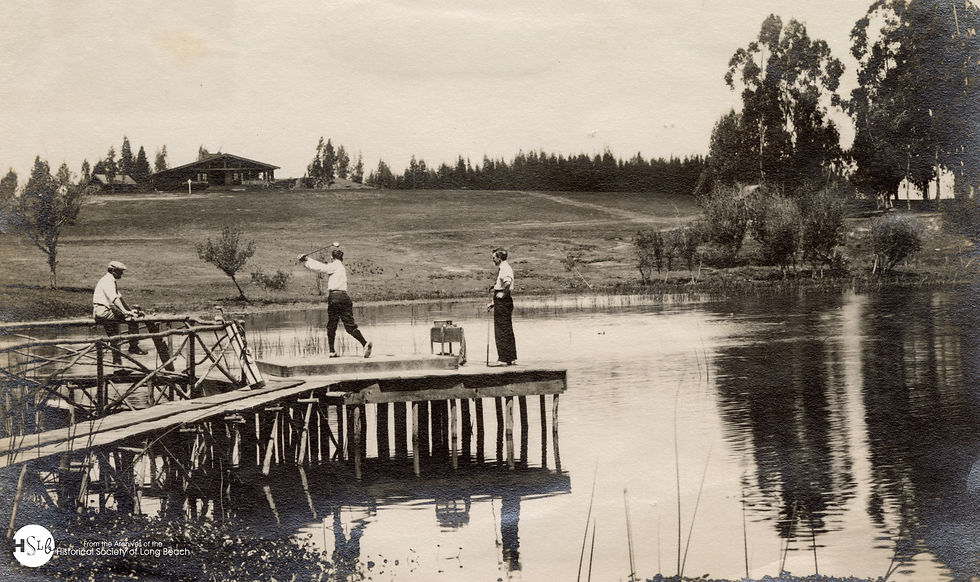
Recreation Park… that huge green heart of Long Beach where golf balls fly wild and kids hunt pretend dinosaurs near the lawn bowlers. If these fairways could talk, they'd probably complain about all the bad shots. But since they can't, I'll share their story instead; how sheep pastures and sandy greens turned into this bustling public park filled with golf swings, laughter, and friendly competition.
Today's Long Beach is all about cargo ships and college life, but right in its center you'll find Recreation Park's famous 18-hole course "Big Rec" and its charming little sister, the 9-hole "Little Rec." This place didn't just happen; it grew from Long Beach's history, the push for public parks, that gorgeous Spanish-style bandshell, and the city's longtime love affair with golf.
Golf's Early Days: Sand Traps And Sheep
Before trains brought tourists to the beach or city officials even knew what "municipal golf" meant, Long Beach folks were already chasing golf balls. Old newspapers say California's first public 9-hole course opened here back in July 1899, laid out near Alamitos and Ocean, by city treasurer Charles Heartwell and engineer Goucher.
This wasn't anything like today's courses. Players fought wind and city sprawl, with holes squeezed between eucalyptus trees and across streets. The "greens" were actually sand pits - something modern golfers used to perfect grass greens wouldn't recognize. By fall 1899, locals formed the Country Club of Long Beach to run the public course, led by Heartwell and Arthur Goodhue (who'd later help start Virginia Country Club).
Alas, like many early courses, this one didn't last. By summer 1900, it was gone. Golf would come back to Long Beach though - driven by hotel owners' dreams, real estate deals, and regular folks wanting somewhere to play.
From Hotel Dreams To Country Clubs
As the 1900s began, Long Beach was booming. People like Goodhue and hotel developer Charles R. Drake (who gave the city its first proper bathhouse) saw leisure as key to the city's growth.
In 1905, they tried starting a country club. Like a tricky golf shot, it didn't work out right away. But by 1909, they regrouped at the fancy Hotel Virginia (built after the "Hotel Bixby" collapsed during construction so nobody wanted that name sticking around). By November, they officially created the Virginia Country Club (VCC), tied to the luxurious hotel where "one night could wipe out a working man's savings."
Drake wasn't a golfer (he said that meant he couldn't be club president), but he bought 15 memberships anyway. Hotel guests would ride surreys to the course - a taste of high-class seaside sport. By April 1910, the VCC had its first nine holes on Reservoir Hill. Sheep kept the "fairways" trimmed, and players putted on sand greens slicked with crude oil (which probably kept the sheep away too).
The Designer Who Shaped Long Beach Golf
Enter Arthur Rigby - the club's first instructor and designer. Hailing from Scotland's golf mecca Carnoustie, Rigby was known as a top clubmaker. He'd worked at Los Angeles Country Club before bringing his skills to LB.
Rigby's design became VCC's foundation. By Christmas 1912, they'd expanded to 18 holes. But nothing stayed put for long in early Long Beach. The club had only leased the land for 10 years. As that deadline neared, members like Fred and Llewellyn Bixby (alongside Goodhue and Drake) hunted for a new home.
They settled on Rancho Los Cerritos - a move that suddenly left the old VCC land empty. That vacant space? It would become Recreation Park.
A New Home And A City Changing
When Virginia Country Club moved to Rancho Los Cerritos in 1921, it changed both the club and Long Beach. The historic ranch with its old adobe made a beautiful setting; it would later become a wealthy neighborhood and Hollywood filming spot.
The new course, designed by Scottish architect Willie Watson and later tweaked by famous American designers William P. Bell and A.W. Tillinghast, quickly earned a reputation as challenging. Local legend says Tillinghast only asked for "a case of Scotch" as payment; a story that still gets told when ocean winds mess with golfers' shots.
Meanwhile, that empty land was about to become something special… the start of public golf for everyone.
The Battle For Recreation Park: Bonds, Parades, And Populism In The Roaring Twenties
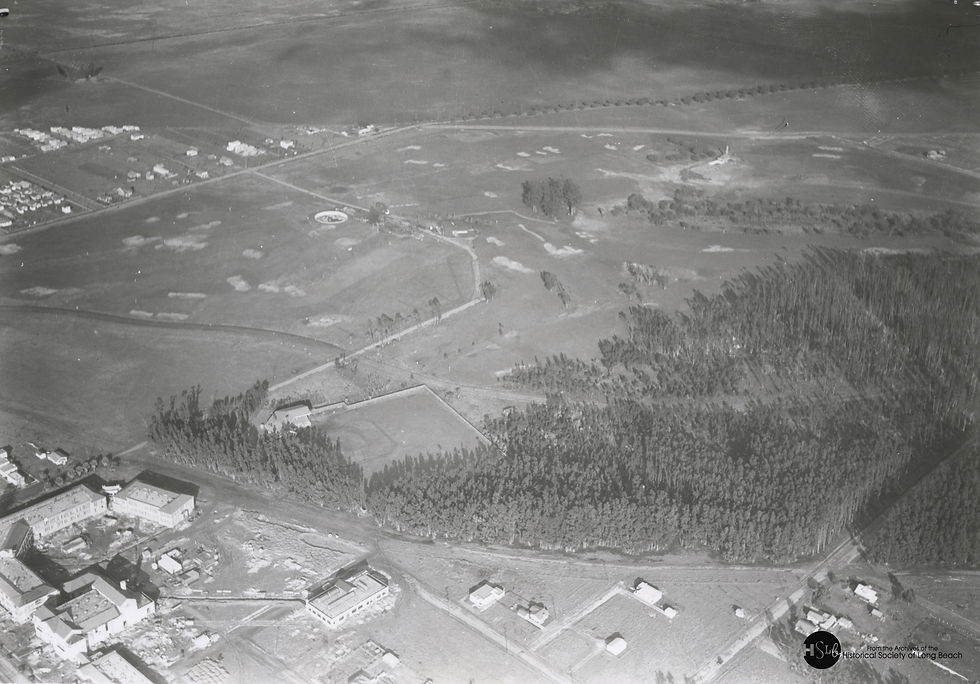
By 1923, the Roaring Twenties were booming, and land was hot property. When the fancy Virginia Country Club packed up and left, that huge 256-acre spot suddenly looked mighty tempting to developers. But Long Beach's big thinkers had a different idea: why not make it a giant public park for everyone? Think of it like Golden Gate Park south.
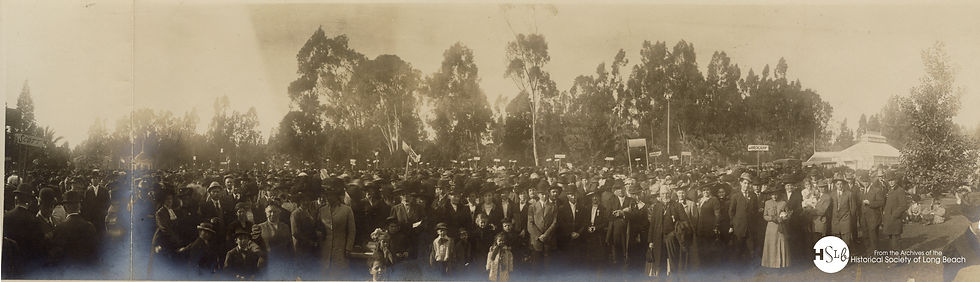
The catch? Voters needed to approve a big bond measure. And back then, passing bonds was tough – requiring a whopping four times more "yes" than "no" votes. So, the city went all out. Newspapers pushed hard with headlines screaming, "Buy Recreation Park!" Kids marched in noisy parades, blowing horns and waving signs they had made themselves. Even car owners got involved, putting on a massive old-timey car rally for the park.
And guess what? It worked like crazy. On June 15, 1923, the bond didn't just pass – it blew the doors off, winning by an insane 16-to-1 margin (10,732 to 659). Even the usually skeptical press called it, "the most signal achievement ever recorded at the polls in this city, if not the entire state." The Long Beach Telegram just shouted, "Glory Be!" That was it. The deal was done. Recreation Park was born, saved from the bulldozers for everyone to enjoy.
Big Rec: From Private Luxury To Public Treasure
Land secured? Check. Now, how about giving regular folks access to a top-notch golf course? That was the plan.
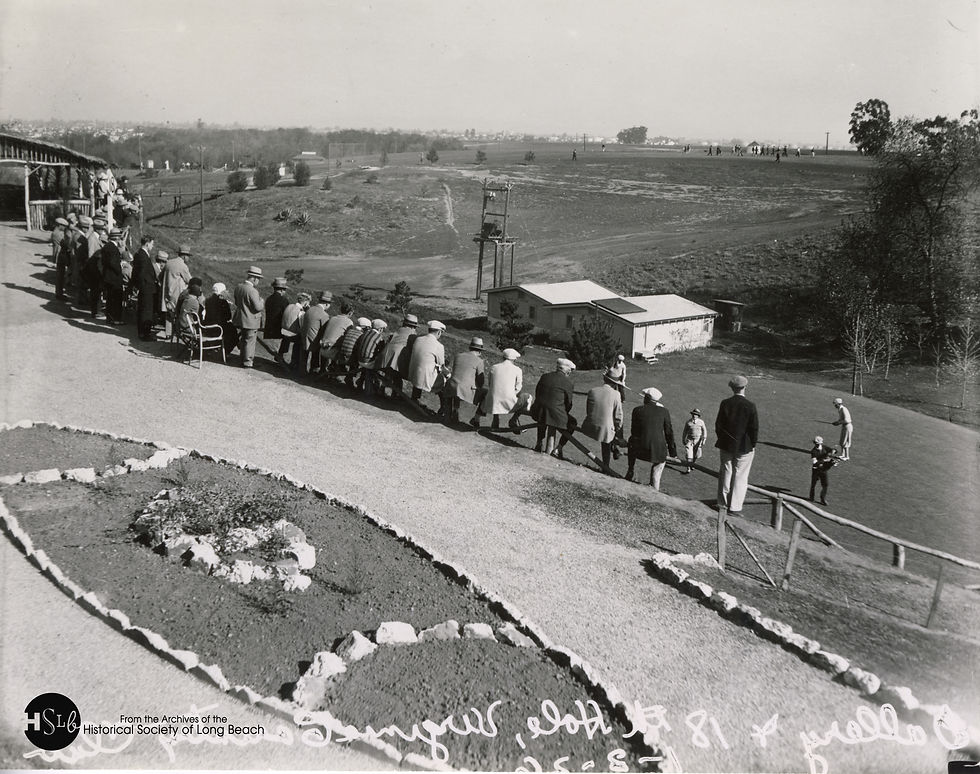
The existing 18-hole course, built back in 1909 by Colonel Charles Drake and the Virginia Country Club crowd, was quickly turned into a city course. And the city wasn't messing around. Starting in 1926, they swapped out the annoying old sand greens for smooth turf greens – a huge relief for anyone who'd ever tried to fix a sand divot with just a bucket and hope.
Recreation Park 18, lovingly nicknamed "Big Rec," sits on rolling land shaded by big trees and guarded by bunkers that'll humble you (and maybe make you laugh). Originally just over 6,400 yards, it's a par 72 course that tests every golfer's skill and every weekend betting pool. It's got a night-lit driving range, pro shop, restaurant, and spots for weddings or those last-minute company retreats.
Then there's Recreation Park 9, or "Little Rec" to its fans. It's the smaller, quieter sibling to Big Rec, sometimes overlooked but adored for being quick, easy, and full of charm. Built in 1928, Little Rec was meant for beginners or anyone wanting a shorter, less stressful round.
The Bandshell
While golfers at Rec Park have been busy chasing birdies and bogeys, another group of locals has been chasing something just as important: the music.
The Recreation Park Bandshell, built in 1929, is a Spanish Baroque/Revival gem tucked into the park’s landscape. With its stucco walls, red-tile roof, and colorful Malibu tile accents, it once hosted everything from symphony concerts to Shakespeare plays. You don't need to love music or theater to admire this place. Its curved arch and bench seating for 600 (plus room for thousands on the grass) made it the city's heart – hosting everything from picnics to graduations. After the 1933 earthquake, the bandshell even housed makeshift classrooms.
Despite legendary moments such as when future presidents Richard Nixon and Herbert Hoover gave speeches there, over time, the Bandshell fell silent. Weather, budget cuts, and changing tastes left it underused and in need of care. That’s where Friends of the Recreation Park Bandshell (FORPBS) stepped in. Formed in 2022, this non-profit is dedicated to restoring the Bandshell and bringing it back to life as a community stage.
Their mission is simple but powerful:
• Preserve history by restoring the Bandshell’s architecture and landmark status.
• Revive culture by hosting concerts, plays, and community events.
• Expand access so that Recreation Park isn’t just about golf and sports, but also about music, theater, and shared experiences.
Already, FORPBS has partnered with groups like Shakespeare by the Sea and the Long Beach Camerata Singers to reintroduce performances. Their vision is to make the Bandshell a year-round gathering place once again - a spot where the arts and recreation meet.
Recreation Park: Keeping The Spirit Alive
Today, Recreation Park is still Long Beach’s second-biggest public park, sprawling over 200 acres. Its golf courses buzz with activity, some of the busiest in Southern California. But it’s more than just golf, you’ll find everything here, from foot-stomping bluegrass festivals and Shakespeare under the stars to Sondheim sing-alongs and dragon-themed playground events. Every summer, the restored bandshell hosts over two dozen performances, living up to its reputation as the city’s beating heart for outdoor gatherings.
Recent upgrades show they’re serious about making everyone feel welcome. There’s rubberized surfacing for easier movement, playground gear for all ages, and even interactive panels teaching kids basic American Sign Language. In a quiet but powerful way, the park says, "You belong here."
More About Recreation Park:
• The Bandshell: Built in 1929, this Spanish Baroque gem features stucco walls, Malibu tile, a grand arch, and intricate plasterwork that rivals even the Hollywood Bowl. For nearly a century, it's hosted concerts, plays, graduations, and community gatherings – a true local landmark. • Fly Casting Pond: Since 1925, this unique spot has drawn folks curious about fly fishing, complete with its own clubhouse. • Blair Field: A baseball institution since 1924 (rebuilt in '57), it's seen everyone from Long Beach State's Dirtbags and Long Beach Coast to Little Leaguers chasing dreams. • Lawn Bowling Green: Added in 1929 with its own clubhouse, this international-sized green (126 feet square) reflects Long Beach's embrace of diverse sports. • Joe Rodgers Softball Field: A local staple since its 1948 debut. • Dog Park: One of the city's first and most popular, expanded to over an acre since the late ‘90s. • Modern Playgrounds: A 2022 renovation brought a $1.9 million dinosaur-themed playground with rubberized surfaces, ADA access, and a "Dino Excavation Zone" where kids dig for fossils while parents lose car keys in the sandbox. |


Comments